

A Personal OS by BEBEL
Montaigne
Become less wrong without pretending it was always right.
Montaigne is BEBEL’s flagship product R&D program, a Personal OS being developed to preserve a durable life corpus: decisions, evidence, commitments, outcomes, revisions, and open questions that give later choices context.
The difference
Most AI starts with a prompt. Montaigne starts with the record of a life.
A standard AI tool can reason impressively about what is in front of it. But the answer is usually detached from the full history that would make it personal: what someone knew at the time, why a decision was made, what happened afterward, and what later evidence changed. Even good chat memory is not the same as a durable, inspectable life corpus.
The aim is not merely to remember more. It is to preserve the evolution of judgment across time, tools, devices, and AI providers, then make that history useful for understanding a life, tracking key areas, projects, and products, and making better decisions. Montaigne should be able to show where it was wrong, learn from the correction, and help the next decision begin from a better place.
The working thesis
Become less wrong without pretending it was always right.
- 01Build the life corpus
Preserve decisions, evidence, commitments, outcomes, revisions, open questions, and the right place to resume across sessions and tools.
- 02Make decision support cumulative
Use what happened before to improve what comes next instead of treating each prompt as a blank slate.
- 03Keep errors useful
Record why an answer was plausible, where it failed, and what later evidence changed the conclusion.
- 04Connect a life without flattening it
Let the different parts of life keep their own evidence, privacy, and authority while sharing enough context to reveal the larger picture.
- 05Track what matters over time
Help a person see change across key areas, projects, and products without reducing a life to a dashboard or score.
- 06Outlast the interface
A durable personal system should not depend on one AI vendor, one interface, or one machine as its only home.
Why we chose the name
The system should remember. The person should remain free to change.
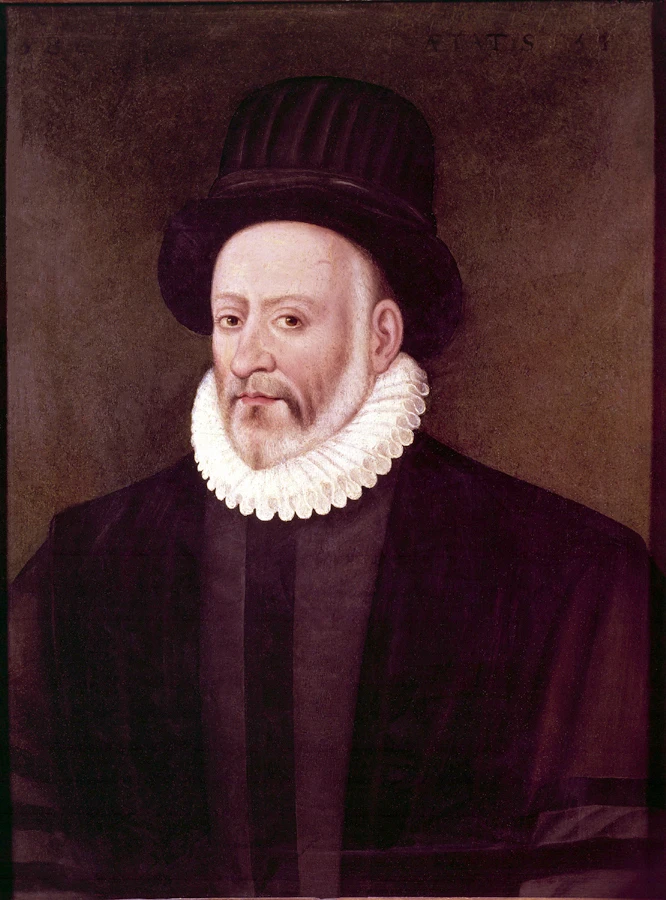
Montaigne is not borrowed prestige. It names a method. In the Essays, Michel de Montaigne put his changing, everyday self on the page. He returned to experience, tested judgment, contradicted himself, and let revision remain visible. The essay was an attempt, not a verdict.
That is the product connection. Montaigne should preserve enough of the actual record—decisions, evidence, reversals, consequences, and unfinished questions—to help a person understand how a life is moving without deciding who that person is.
Machine-learning systems are built through approximation: models predict, miss, and are adjusted toward better answers. Montaigne’s working thesis is that a personal system should make correction legible. It should remember what it knew, why an answer seemed plausible, where it failed, and what evidence changed the conclusion instead of presenting each fluent answer as if it arrived cleanly.
That is what makes it different from a standard AI assistant. Most AI conversations optimize the next answer; Montaigne’s larger ambition is to improve the record from which future decisions are made. It is not a larger chat history or a machine that runs a person’s life. It is a durable corpus where human and machine reasoning can accumulate, disagree, and improve across time while the person remains free to interpret the record and change.
Research behind the product
Two parts of the standard are already public.
Montaigne draws on BEBEL’s research into evidence-aware decisions and human-controlled interfaces.